
Policy disagreements are a frequent source of instability in coalition governments, even in democracies with long histories of coalition governance. For example, in many European countries, coalitions have collapsed under the weight of ideological and policy contestations. However, South Africa’s Government of National Unity (GNU), formed after the 2024 elections, has thus far survived these challenges. Despite sharp differences between the two largest parties in the coalition, the African National Congress and the Democratic Alliance, on domestic and foreign policy issues, the two-year-old GNU has endured a relative degree of stability. This resilience demonstrates that policy contestations, at least in the case of South Africa, do not inevitably lead to collapse. Instead, it highlights the importance of effective conflict management as one of the tools necessary to maintain a coalition. The South African case demonstrates that coalition survival depends less on eliminating disagreements and more on institutionalising mechanisms to handle them constructively.

The year 2024 marked a significant moment in global politics, with many countries holding elections and, resultantly, forming coalition governments. In Europe, coalition arrangements are more common than not in countries such as Belgium, Bulgaria, Germany, Iceland, Ireland, Italy and the Netherland, amongst others, although they often face instability when policy disagreements arise. South Africa also entered this domain following the 2024 general elections, when the African National Congress (ANC) lost its parliamentary majority and a coalition government, styled as a Government of National Unity (GNU), was formed.
From the outset, observers anticipated sharp contestation within the coalition, particularly between its two largest coalition partners, the ANC and the Democratic Alliance (DA). Takalani and Maemu (2025) noted that, given the inherent ideological diversity amongst its members, the GNU was expected to experience tensions and conflicts between participating parties, ultimately leading to its collapse. Initially, these commentators seemed vindicated, as disagreements emerged on domestic issues, as well as foreign policy positions regarding ongoing conflicts such as those between Israel and Palestine and Ukraine and Russia. Many political and policy analysts predicted that these policy tensions would lead to the GNU’s collapse, echoing the fate of several European coalitions that fractured under similar pressure. Yet, South Africa’s GNU has endured, offering an important case study into policy contestation within coalition governments and how contestation is not necessarily a terminal threat, but rather a test of how effectively it can be managed.
Takalani and Maemu (2025) argue that in coalition governments, determining a shared policy direction is often a source of contention, particularly when coalition partners hold divergent ideological positions. Thijm and Fernandes (2025) further argue that when the president and participating parties have differing policy priorities ‘agency loss’ can occur. This is when cabinet ministers use their institutional authority and specialised knowledge within their portfolios to pursue objectives that do not reflect the shared policy commitments of the coalition. In South Africa’s GNU, policy disagreements have emerged over various policy issues, as demonstrated in Table 1. In particular, recent disputes over the proposed relaxation of the Broad-Based Black Economic Empowerment (B-BBEE) requirements for Starlink illustrate these risks. The proposal exposed divergent policy preferences amongst GNU partners, with some parties prioritising investment and digital infrastructure, while others emphasised the preservation of South Africa’s transformation agenda. Cases of agency loss such as this can undermine policy coherence, weakening trust amongst coalition partners and creating uncertainty for investors and the public. The episode underscores the importance of establishing and adhering to consultation and dispute resolution mechanisms to ensure that contentious policy decisions are collectively deliberated before being announced or implemented. Strengthening these coordination mechanisms is essential for maintaining coalition solidarity, improving policy certainty and safeguarding the long-term stability of coalition governments.
| Policy area | ANC position | DA position |
| Basic Education Laws Amendment Act (BELA) | Supports the implementation of BELA to strengthen state oversight over school admissions and language policies. | Opposes provisions that reduce the authority of school governing bodies, arguing they undermine parental choice and school autonomy. |
| National Health Insurance (NHI) | Supports the implementation of universal, state-led healthcare systems to improve equitable access to healthcare. | Opposes the current NHI model, citing concerns over fiscal sustainability, implementation capacity and its impact on the private healthcare sector. |
| Land expropriation | Supports land reform, including expropriation, where constitutionally permissible, to address historical inequalities. | Supports land reform but opposes expropriation without adequate compensation, arguing it threatens property rights and investor confidence. |
| Economic policy and state-owned enterprises | Supports a developmental state with strategic state intervention and continued reform of state-owned enterprises. | Favours market-oriented reforms, greater private sector participation, fiscal discipline and privatisation where appropriate. |
| Labour | Supports stronger labour protections, collective bargaining and state-led employment interventions. | Advocates for greater labour market flexibility and regulatory reforms to stimulate job growth and investment. |
| B-BBEE | Supports B-BBEE as a key instrument for redressing historical inequalities. | Support redress but argues for a greater emphasis on socio-economic disadvantages and opportunity-based empowerment rather than race-based measures. |
| Russia-Ukraine conflict | Maintains a policy of non-alignment while preserving diplomatic relations with Russia and advocating for dialogue. | Supports a stronger alignment with international condemnation of Russia’s invasion of Ukraine and a more explicit commitment to the rules-based international order. |
| Israel-Palestine conflict | Strongly supports the Palestinian cause and has pursued legal action against Israel before the International Court of Justice. | Supports humanitarian protection for Palestinians but has questioned aspects of the governments diplomatic approach and argued for a more balanced foreign policy. |
| Relations with BRICS and Western countries | Supports strengthening south-south cooperation through BRICS while maintaining strategic autonomy. | Supports maintaining strong relations with BRICS but advocates deeper engagement with Western democracies and greater emphasis on trade and investment partnerships. |
Table 1: Comparative key areas of policy contention within the South African GNU’s two largest parties (source: authors’ own construction).
The differences outlined in Table 1 reflect the contrasting policy preferences of the ANC and DA, the GNU’s largest and second largest parties, respectively. Although these policy differences have generated significant contestation within the GNU, they have not resulted in the collapse of the coalition. Instead, the coalition has largely relied on negotiation, dialogue and compromise to manage disputes.
Initially, the formation of the GNU was anchored in a Statement of Intent (SoI) that set out the principles, values and governance arrangements agreed to by all participating political parties. By signing the SoI, GNU partners collectively committed, despite their ideological and policy differences, to a common framework for cooperation, collective decision-making and the promotion of stable governance. The SoI established consensus as the preferred approach to decision making and provided for the principle of sufficient consensus where unanimity cannot be achieved. It also outlined mechanisms for consultation and the internal resolution of disputes, requiring disagreements to be addressed through agreed institutional processes before they are escalated publicly (Government of National Unity, 2024). Shopola and Munzhedzi (2025) argue that after more than 100 days in office, the GNU appeared to exhibit signs of strain that threatened the cooperative principles on which the SoI was founded. Many of these tensions arose from disagreements amongst members of the executive representing different GNU partners, with several disputes unfolding in the public domain. The SoI nominally provided an internal mechanism for managing and resolving conflicts between coalition partners. Consequently, the public nature of these disagreements suggested that the internal conflict resolution structures envisaged in the SoI were either being ineffectively utilised or undermined.
To address the policy disputes within the coalition government that were being aired in public, President Cyril Ramaphosa introduced the GNU Clearing House Mechanism in 2024. It was announced that the Clearing House Mechanism, overseen by Deputy President Paul Mashatile, would be a formal structure to address policy disputes within the ten-party GNU and give effect to the SoI’s provisions on consultation and dispute resolution (Presidency of the Republic of South Africa, 2024). This mechanism is a structured forum where disagreements are formally raised, debated and resolved. Rather than allowing policy differences to derail governance, it channels policy contestation into a managed process. By institutionalising a space where political and policy differences could be formally raised, debated and mediated, the Presidency ensured that policy contestation did not spiral into a destabilising crisis. It is worth noting, however, that the Clearing House is not a decision-making structure, nor is it the final arbiter on issues of policy dispute, rather it functions as a recommending body. Unresolved matters are referred to the Political Leaders Forum for final consideration (Presidency of the Republic of South Africa, 2024).
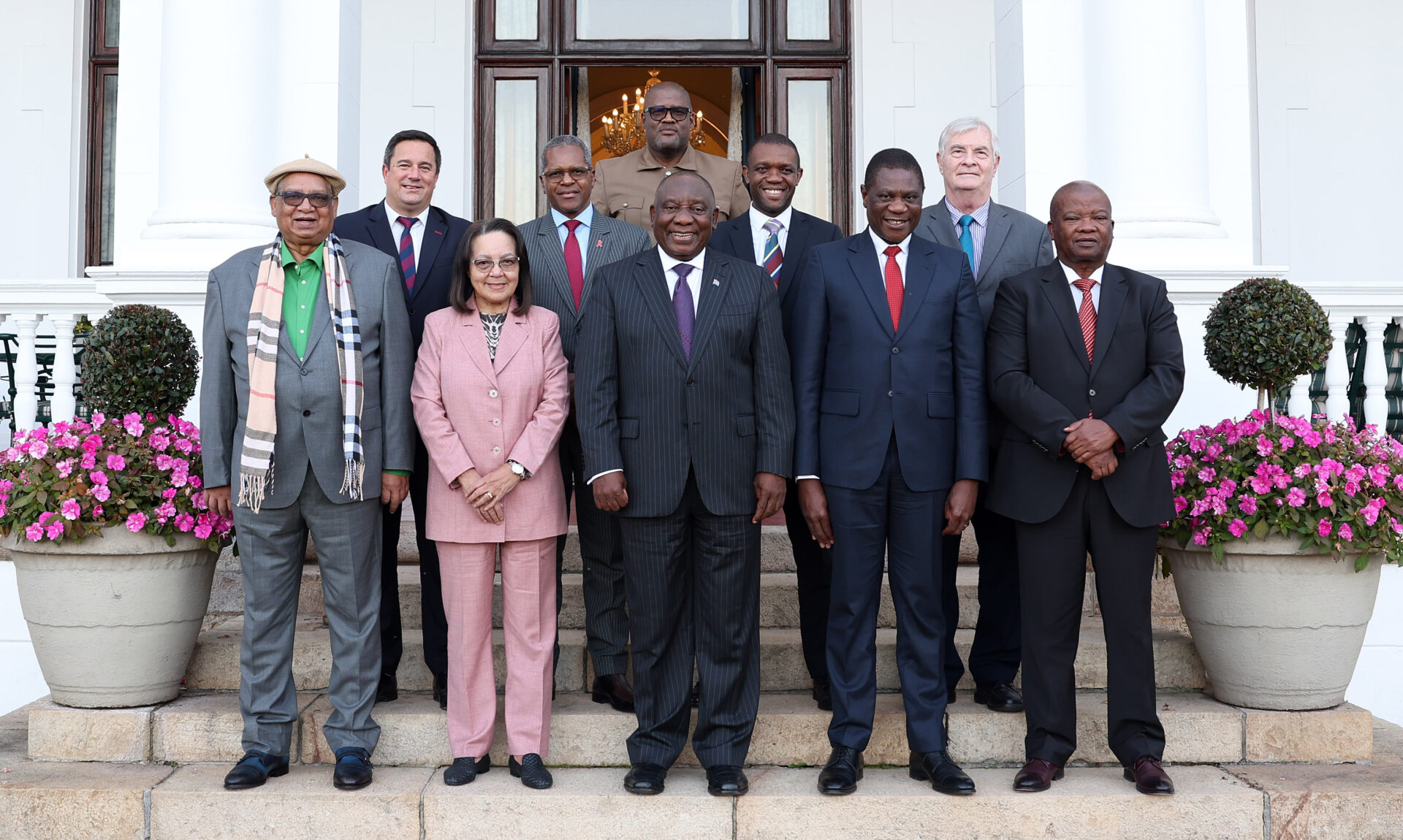

As it is an internal mechanism it is difficult to know the extent to which the Clearing House has been utilised by the members of the GNU. However, the decrease in public disputes among parties, which could threaten the government’s stability, points to the apparent success of the Clearing House, perhaps in conjunction with the Political Leaders Forum and other mechanisms, in managing contentious issues. This distinguishes South Africa’s GNU from several other countries with coalition governments, where lack of consensus and unresolved policy disputes have led to the collapse of coalitions. From a comparative governance and policy perspective, the South African experience so far suggests that coalition stability depends less on ideological convergence and more on the existence of effective mechanisms for managing policy conflict.
Most coalition collapses result from a combination of factors, ranging from ideological differences, leadership battles, global dynamics, public policy disagreements and different perspectives on legislative and administrative issues. Unresolved issues associated with colonisation, such as week state institutions, identity politics, and historical inequalities, often shape coalition failure in former colonies. In contrast, coalition disputes in European contexts are often framed as disagreements over major macro-economic and domestic policies. However, similar policy disagreements are also evident in African coalition governments, where differences over economic policy, transformation and governance priorities have shaped coalition dynamics. Different historical contexts, institutional design, leadership and party dynamics, electoral incentives, and broader political and socio-economic factors, however, may influence these disputes. Global economic and political alignment issues at the supra-national level also affect coalitions. However, while differences in foreign or immigration policy may cause the collapse of a country’s coalition government, most disagreements stem from domestic issues rather than international ones.
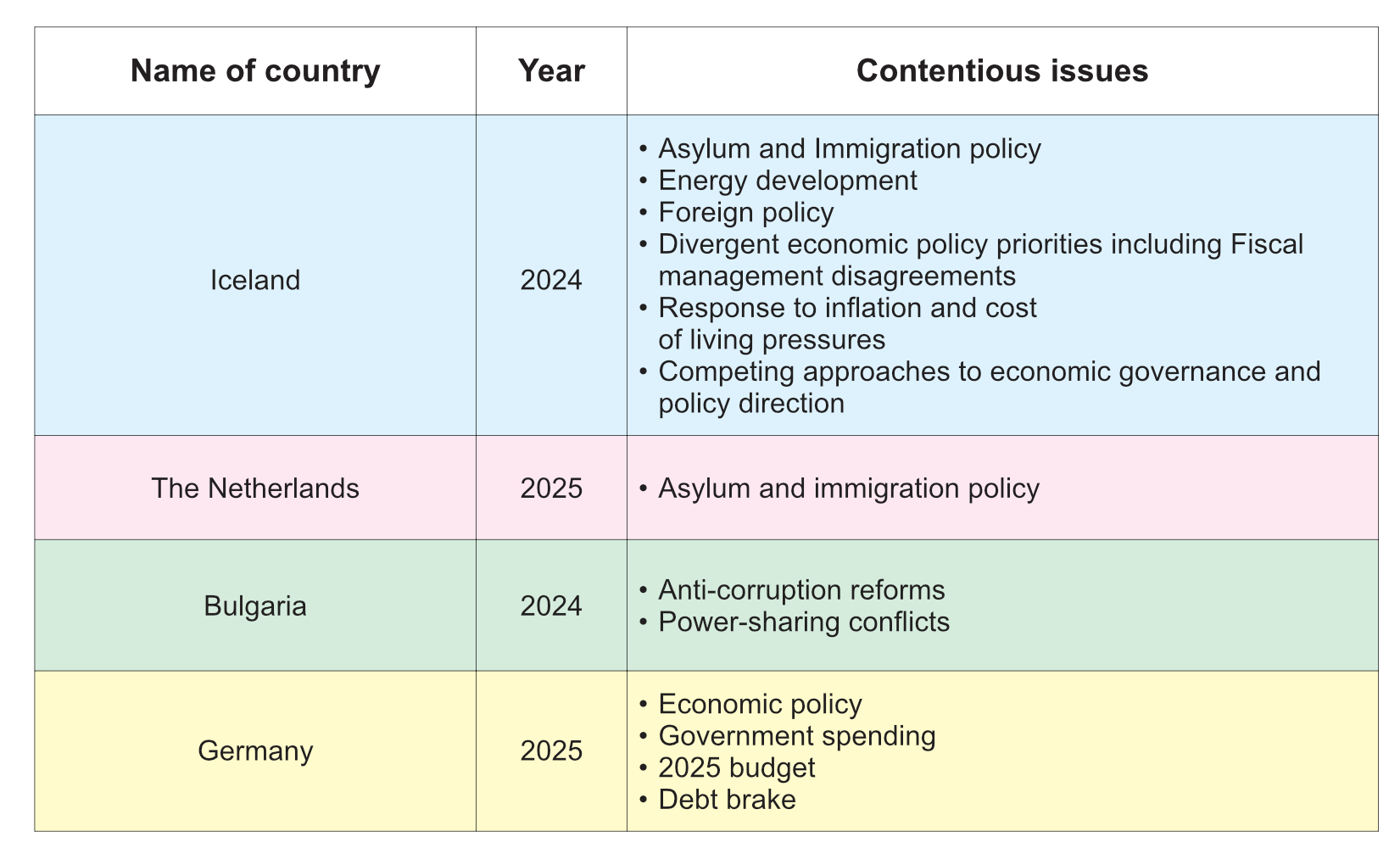
Table 2: Comparison of specific causes of coalition collapse (source: authors’ own construction)
The experiences of collapsed coalition governments in the countries listed in table 2 demonstrate how different party preferences and competing political interests can weaken coalition cohesion and contribute to coalition collapse. Although coalition agreements establish a shared governing framework, ministers remain influenced by their respective party mandates and may use their departmental political authority to advance policies that diverge from the coalition’s collective preferences. Migration policy has been a particularly contentious area, as coalition partners often differ over issues such as border control, asylum systems and migrant integration policies, humanitarian obligations and membership of international treaties and organisations (Moses, 2025; Stevis-Gridneff and Moses, 2023). When such policy disagreements are not effectively managed, through internal dialogue and dispute resolution mechanisms, policy disputes can escalate into broader conflicts that undermine trust amongst coalition partners and threaten government stability. For South Africa’s GNU, these cases highlight that, for a coalition government to survive, parties, and their ministers, need to operate within agreed to coalition processes, through which contested policy issues can be resolved internally before they develop into public disputes that could destabilise or collapse the coalition. As Klüser (2024) demonstrates, ministers often exploit their portfolios to advance partisan agendas, but coalition survival depends on mechanisms that force them to act within agreed processes of shared responsibility.

The concept of agency loss helps explain how policy disputes between coalition partners in Germany, Iceland and the Netherlands could undermine cooperation and ultimately contribute to government instability. In these cases, parties in the coalition entered government with different policy and ideological positions and electoral commitments based on their election manifestos and promises made to the electorate. For example, and as stated above, migration policies have frequently been a source of coalition tension. Political parties that favour restricting migration may push for tighter controls over borders to satisfy their voters, while other coalition partners may prioritise free movement and social integration. In Germany, migration policy contributed to tensions within the coalition bloc as parties held different views on asylum rules, deportation and integration measures. According to Kinski and Brause (2025), in 2024, Germany’s coalition government faced significant tensions due to disagreements over economic management and migration policy. Weak economic growth, high prices for energy and debates over fiscal rules exposed divisions amongst coalition partners regarding the balance between investment and fiscal restraint. At the same time, migration and asylum policies became major sources of political and policy contestation with disputes emerging over border management, deportations and the support provided to asylum seekers. Similar dynamics occurred in the Netherlands in 2023, where disagreements over asylum and migration management became an impasse amongst coalition partners contributing to the eventual collapse of the government (de Boer, 2025). Since this collapse, and the formation of a new government, the Netherlands has adopted increasingly restrictive migration policies (ibid). Similarly, Bulgaria’s fragile coalition government collapsed in December 2024 amid corruption scandals, growing public frustrations, mass youth-led protests and increasing distrust in political institutions (Pala, 2026). The subsequent elections held in April 2025 marked the country’s eighth parliamentary elections in five years, following a prolonged period of political instability and successive collapses of coalition governments. Likewise, the coalition in Iceland collapsed after partners were unable to reconcile differences over foreign policy, asylum and immigration (Henley, 2024). It is worth noting that the disagreements did not arise from a single foreign policy decision, rather the disagreement arose on how Iceland should respond to international conflicts when political parties took different policy positions and could not find consensus.

To assess the GNU’s positive impact and its potential in reviving investors and public confidence, it is necessary to consider the economic climate before its formation. Cedras (2021, as cited in Takalani and Maemu, 2025) notes that political instability had disrupted the economy and eroded trust in public institutions, leading to businesses and other key stakeholders withdrawing their support to the ANC led government. Against this backdrop, early media and public evaluations of the GNU have been encouraging even though the long-term prospects remains uncertain.
While investor confidence in South Africa is increasing, it is nevertheless important not to overstate the GNU’s achievements, in this regard. For example, South Africa’s unemployment rate, and more so its youth unemployment rate, remains alarmingly high. According to Stats SA’s Q1 2026 Labour Force Survey, the youth unemployment rate rose to 45.8 per cent amongst those aged 15–34, with the 15–24 age group facing an even higher rate of 60.9 per cent. This underscores that any optimism in the economy, must be tempered by the fact that labour market exclusion persists. Maleka (2024) argues that the economic policies of the GNU are influenced by the differing economic ideologies of its coalition partners, which can broaden policy debates but also create uncertainty for investors.
Maleka’s argument can be contested, however, as there is evidence indicating that the formation of the GNU has generated a relatively positive response from international financial institutions and credit rating agencies, acknowledging progress in South Africa’s economic reforms. Masipa and Mabitsela (2025), for example, argue that despite deep ideological and policy differences amongst coalition partners, the GNU’s cohesion has allowed it to stabilise the country’s electricity supply, bolster investor confidence and strengthen fiscal credibility. This, in turn, has reassured markets and created momentum for gradual economic recovery. For example, according to the National Treasury, in response to South Africa’s gradually improving fiscal performance and sustained commitment to structural reforms, Moody’s Investor Service revised South Africa’s outlook from stable to positive while affirming its long-term sovereign rating at Ba2 (National Treasury, 2026). In order to place debt on a downward trajectory, continued progress needs to be made on these initial improvements. Moody’s also anticipates that ongoing reforms could encourage investment and projects real gross domestic product (GDP) growth to reach approximately two per cent by 2028 (Moody’s Investor Services, 2026). While external risks such as the conflict between the United States and the Republic of Iran may weigh on short term growth, South Africa’s policy response is expected to remain measured, preserving macro-economic stability. Importantly, the likelihood of policy reversal during the upcoming electoral cycle is seen as limited (ibid.).
While governance success should not be measured solely through an investor lens, this nevertheless provides a useful framework for assessing policy communication and consistency. As such, although policy disagreements persist amongst coalition partners, the contestations have not translated into significant policy paralysis or dissuaded investor confidence. From a policy perspective, the experiences suggest that ideological diversity within a coalition does not necessarily undermine economic confidence. Instead, effective coordination mechanisms and a commitment to reform enable governments to manage policy differences while maintaining investor trust. From a governance perspective, the fact that certain outlooks improved for South Africa under a coalition government suggests that there is no inherent reason to think that a stable coalition is worse at governing than a single party majority.
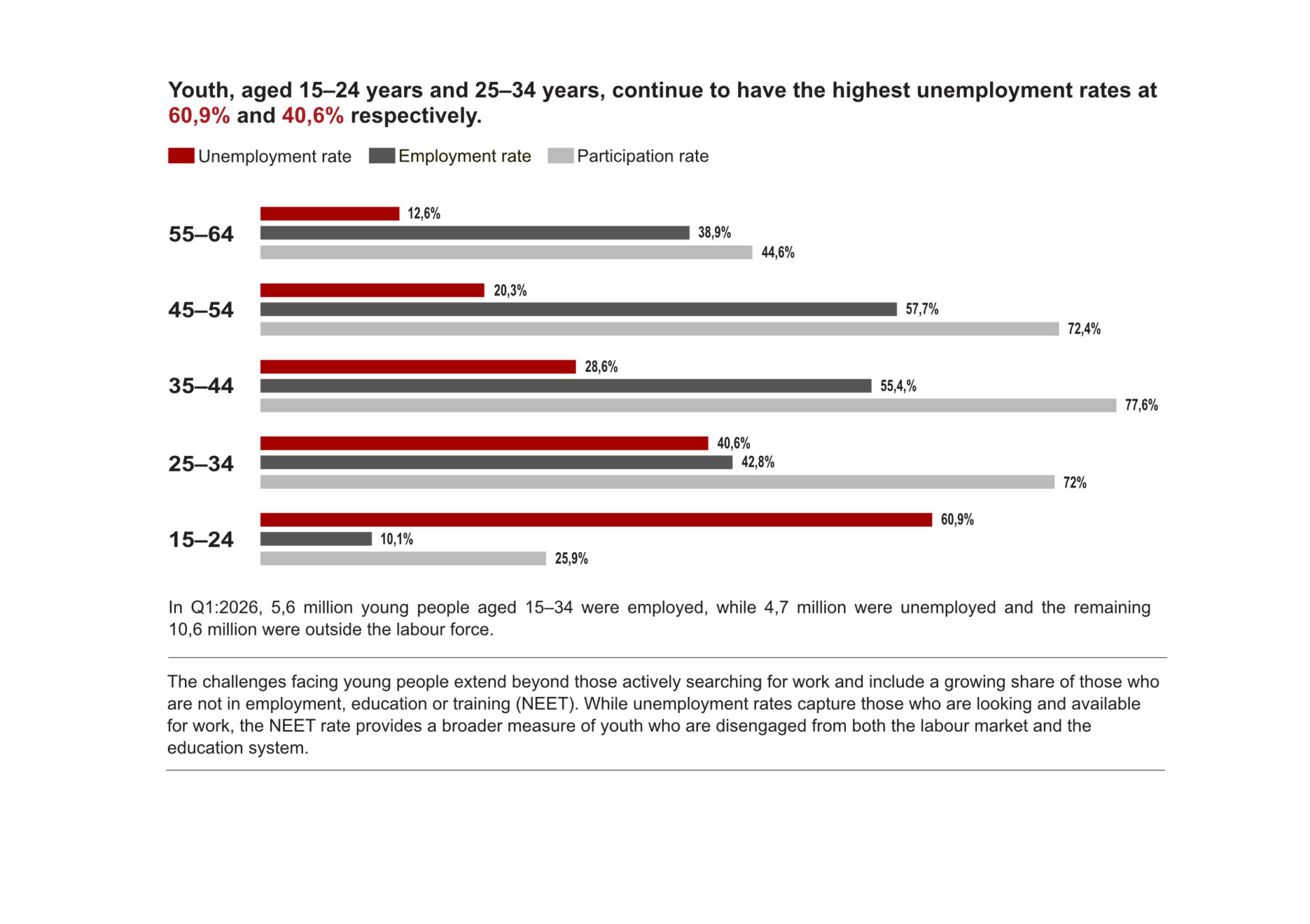
Source: Statistics South Africa: Quarterly Labour Force Survey (QLFS) Q1:2026
While the collapse of many coalitions in Europe are triggered by ideological and policy disputes, South Africa’s GNU has survived for two years, despite significant policy contestation amongst its coalition partners, particularly the ANC and DA. This suggests that coalition stability is shaped less by the existence of policy differences and more by the willingness of political actors to remain in dialogue. From a policy perspective, South Africa offers an important lesson for other coalition governments; institutionalised mechanisms for dialogue can help coalitions withstand ideological and policy differences without resorting to government collapse or repeated elections. Although the GNU continues to face governance challenges, its relative stability demonstrates that effective coalition management can support policy continuity and enhance public confidence during periods of political fragmentation.
Boikanyo Collins Nkwatle, an emerging researcher and PhD candidate at the University of Northwest Mafikeng Campus.
Dr. Nyawo Gumede, a Lecturer in Strategy, Innovation and Public Management within the Sol Plaatje University School of Economics and Management Sciences.
de Boer, F. (2025) From common pact to national paths: A study on national crisis framing and the implementation of the EU Pact on Migration and Asylum. MA thesis, Malmö University. Available from: <https://www.diva-portal.org/smash/record.jsf?pid=diva2%3A1980262&dswid=-5288> .
Faas, T. and Klingelhöfer, T. (2026) Same old, same old? The return of the (not so) grand coalition after the 2025 German Bundestag election. West European Politics, 49 (4), pp. 1116–1132.
Government of National Unity. (2024) Statement of intent and modalities of 2024 Government of National Unity, 14 June. Available from: <https://cisp.cachefly.net/assets/articles/attachments/93080_gnu_statement_of_intent_and_modalities_14_june_2024.pdf>.
Henley, J. (2024) Iceland’s PM calls November snap election as coalition collapses. The Guardian, 13 October. Available from: <https://www.theguardian.com/world/2024/oct/13/icelands-pm-calls-november-snap-election-as-coalition-collapses> .
Kinski, L. and Brause, S. D. (2025) Germany: Political developments and data in 2024: Collapse of the governing coalition. Political Data Yearbook, 64 (1), pp. 231–253.
Klüser, K. J. (2024) Keeping tabs through collaboration? Sharing ministerial responsibility in coalition governments. Political Science Research and Methods, 12 (1), pp. 27–44.
Maleka, M. S. (2024) The implications of a Government of National Unity on strategic planning in South Africa. South Africa Government: Department of Communications and Digital Technologies, June. Available from: <https://www.researchgate.net/publication/381602366_The_Implications_of_a_Government_of_National_Unity_on_Strategic_Planning_in> .
Masipa, M. and Mabitsela, S. (2025) Exploring the factors that contributed to the formation of Government of National Unity (GNU) in 2024 in South Africa. Journal of Nation-Building & Policy Studies, 9 (2), pp. 5–20.
Maswanganyi, F. T. (2025) South Africa’s 1994 and 2024 Government of National Unity: Challenges, opportunities, and lessons for democratic consolidation. Journal of Public Administration and Development Alternatives (JPADA), 10 (sil), pp. 137–159.
Moody’s Investor Service. (2026). Rating action: Moody’s ratings changes South Africa’s outlook to positive from stable, affirms Ba2 ratings. Moody’s, 22 May. Available from: <https://www.treasury.gov.za/comm_media/press/2026/Rating%20Action%20Moodys%20Ratings%20changes%20South%2022%20May%202026.pdf> .
Moses, C. (2025) Dutch government collapses over migration dispute. The New York Times, 3 June. Available from: <https://www.nytimes.com/2025/06/03/world/europe/geert-wilders-netherlands-coalition.html> .
National Treasury. (2026) Government’s response to rating action of Moody’s Investors Service. South African Government, 22 May. Available from: <https://www.gov.za/news/media-statements/government%E2%80%99s-response-rating-action-moody%E2%80%99s-investors-service-22-may-2026>.
Pala, M. (2026) Bulgaria’s 8th vote in 5 years tests chances of breaking cycle of instability. Anadolu Agency, 18 April. Available from: <https://www.aa.com.tr/en/europe/bulgarias-8th-vote-in-5-years-tests-chances-of-breaking-cycle-of-instability/3910335> .
Presidency of the Republic of South Africa. (2024) Statement on the adoption of the terms of reference of the GNU clearing house mechanism. The Presidency. Available from: <https://www.thepresidency.gov.za/statement-adoption-terms-reference-gnu-clearing-house-mechanism>.
Shopola, A. and Munzhedzi, H. (2025) Government of National Unity: A panacea for cooperative governance in South Africa? Journal of Public Administration, 60 (1-1), pp. 347–360.
Statistics South Africa. (2026). South Africa’s youth and the labour market: Q1 2026. Available from: <https://www.statssa.gov.za/?p=19526>.
Stevis-Gridneff, M. and Moses, C. (2023) Dutch government’s collapse highlights Europe’s migration crisis. The New York Times, 8 July. Available from: <https://www.nytimes.com/2023/07/08/world/europe/netherlands-refugees-government-collapse.html>.
Takalani, H. and Maemu, E. (2025) The role of the Government of National Unity in promoting good governance in South Africa: A critical analysis of its opportunities and challenges. Journal of Public Administration, 60 (1-1), pp. 315–327.
Thijm, J. and Fernandes, J. M. (2025) Parties and coalition governance in presidential democracies. Political Research Quarterly, 78 (2), pp. 481–494.

