
Mediation is arguably the tool of choice for conflict transformation in Africa’s regional peace and security governance. Across the continent, Regional Organisations (ROs), such as the Intergovernmental Authority on Development (IGAD), identify mediation as their preferred instrument for addressing armed conflict, as reaffirmed in practice through the establishment of mediation support units and the convening of high-level diplomatic processes. Yet the manner in which mediation is operationalised diverges significantly from the models that dominate mainstream scholarship. In eastern Africa, mediation is increasingly an executive prerogative conducted within executive leadership circles, with heads of state assuming the principal mediating role, blending institutional mandates with personal networks, geopolitical calculations and informal diplomatic practices.
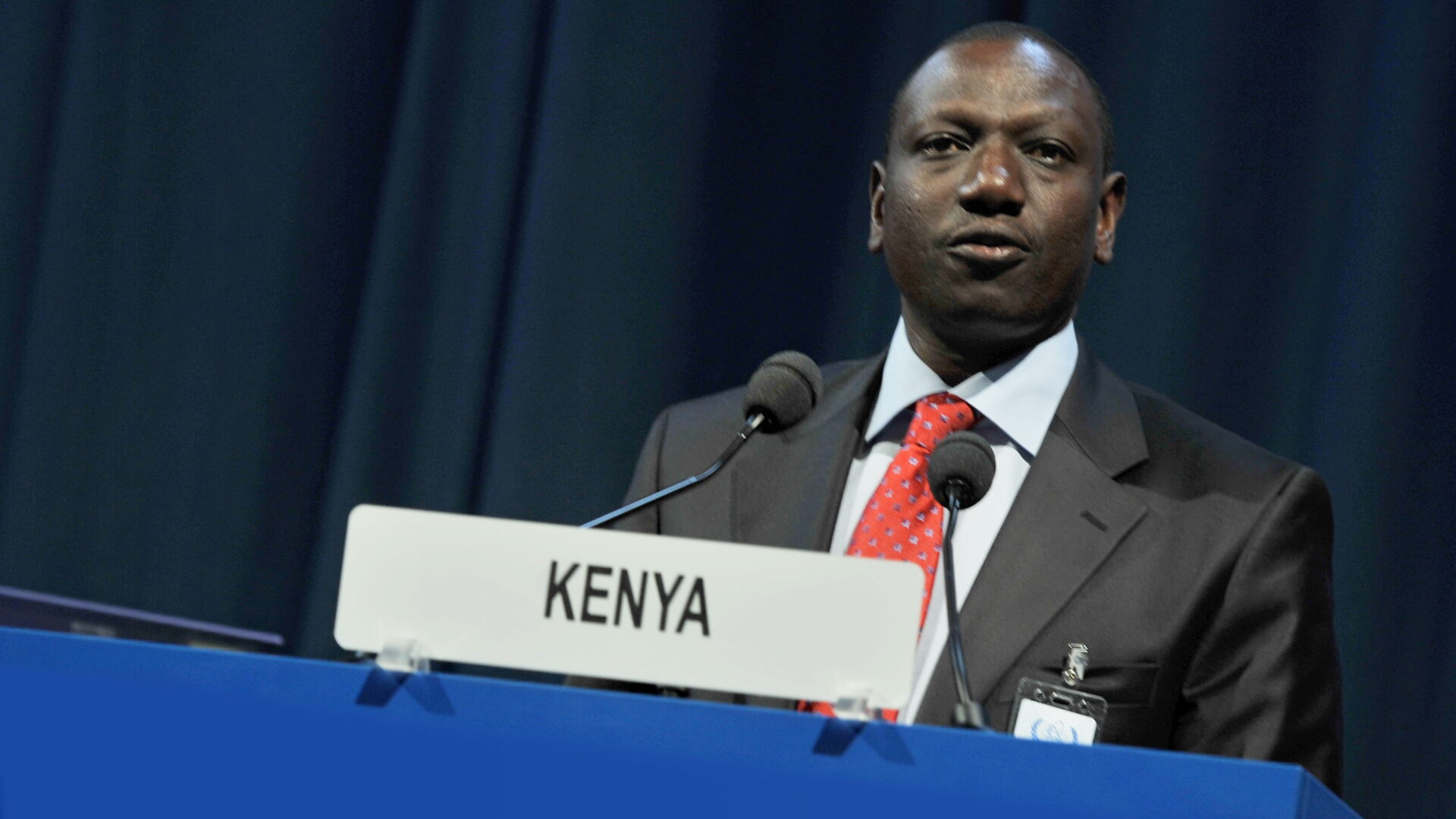
Kenya offers a particularly instructive case. Over the decades, Nairobi has established a reputation as a regional diplomatic hub, hosting and/or leading peace processes for countries across the region, including Sudan, culminating in the 2005 Comprehensive Peace Agreement (CPA), as well as Somalia, South Sudan, Ethiopia and the eastern Democratic Republic of the Congo (DRC). Yet the character of Kenya’s mediation practice has evolved in ways that warrant closer scrutiny. The presidency has emerged as the principal organising axis of Kenya’s regional engagement, shaping the tempo, direction and visibility of its mediation efforts in ways that both enable and complicate regional peace governance.
Kenya’s model of presidentialised mediation emerges as a form of conflict diplomacy that is formally anchored in regional and international mandates but substantively driven by executive agency, summit politics and informal diplomatic channels. This model offers strategic advantages in volatile conflict environments but also introduces significant risks of legitimacy drift and institutional strain. Understanding its logic is essential to strengthening regional peace architecture.
Kenya’s model of presidentialised mediation emerges as a form of conflict diplomacy that is formally anchored in regional and international mandates but substantively driven by executive agency, summit politics and informal diplomatic channels
Tweet
Presidentialised mediation
The conventional conceptualisation of mediation, rooted in the liberal peacebuilding tradition, posits an impartial third party facilitating dialogue between belligerents through formal, procedurally insulated processes, as envisaged in the United Nations (UN) guidance on effective mediation. Yet this model assumes a separation between the mediator and the political decision-maker that collapses in practice.
Presidentialised mediation reflects a distinct political form of conflict engagement that is not necessarily an aberration from mediation but rather an adaptation to the realities of multipolar and fragmented regional (dis)orders. It combines institutional legitimacy – derived from the mandates of multilateral organisations, like the UN, African Union (AU) and ROs like IGAD – with executive discretion, personalised diplomatic channels and strategic and pragmatic calculations. The case of Kenya reveals that presidentialised mediation, in practice, does not displace the institutional architecture; rather, it sits at its apex, reshaping its direction and tempo.
Presidentialised mediation reflects a distinct political form of conflict engagement that is not necessarily an aberration from mediation but rather an adaptation to the realities of multipolar and fragmented regional (dis)orders
Tweet
This model aligns with recent scholarship which recognises that mediation is increasingly shaped by a combination of normative positioning, operational pragmatism and strategic embeddedness. This also resonates with the transformation of ROs into flexible, adaptive platformised arenas, where mediation is enacted through relational practices and political improvisation rather than rigid institutional frameworks.
The promise
Speed and flexibility: Presidential engagement enables rapid responses to fluid conflicts. When war erupted in South Sudan in December 2013, IGAD convened an extraordinary summit within a week and initiated mediation within ten days, one of the swiftest responses by an African regional organisation to a conflict within a member state. Such agility is difficult to achieve through purely technocratic processes.
Direct access to conflict principals: Heads of state can engage directly with counterparts in ways that formal mediators cannot. Kenya’s presidential diplomatic activism, including historical engagements in Sudan and Somalia and more recent involvement in South Sudan, Sudan, Ethiopia and the DRC peace processes, illustrates this access, while Kenya’s hosting of peace processes reinforces Nairobi’s identity as a regional diplomatic hub.
Political signalling: Presidential engagement signals high-level commitment and can galvanise regional and international attention due to the capacity of heads of state to bind their states to agreements at the summit level.
The peril
Legitimacy drift: Kenya historically derived its mediation credibility from its strategic ambivalence, balancing Western alignment with arguably indifferent Pan-African commitments and serving as a venue acceptable to all sides. However, legitimacy has become more contingent and sensitive to perceptions. As Kenya’s mediation becomes more closely associated with individual presidents and their interests, trust becomes more difficult to sustain. Perceptions of partiality, such as those arising from Kenya’s engagement with the Rapid Support Forces (RSF) in Sudan, where Kenya’s posture was perceived as interference, erode credibility even where formal mandates exist.
Research in African mediation demonstrates that legitimacy matters as much as material capacity in determining mediation outcomes. Extant scholarship argues that African third parties are more likely to conclude durable negotiated settlements when they are perceived as legitimate by conflict parties. In Kenya’s case, legitimacy appears to have shifted from structural institutional prestige to more volatile executive signalling.
Institutional fragility: Presidential mediation relies heavily on informal diplomacy, leader-to-leader engagement and closed-door negotiations. This informality provides flexibility but narrows accountability, weakens institutional continuity and exposes mediation to reputational volatility. When mediation momentum is tied to specific presidential priorities – as seen when the Nairobi Process in the DRC lost momentum following leadership changes – processes can stall or collapse.
Overlapping regionalism: Kenya operates across IGAD, East African Community (EAC) and AU frameworks. While overlapping mandates allow flexibility, they also create risks of forum competition and fragmentation. For Kenya, the EAC is arguably perceived as the most important regional economic community (REC), particularly if the country were forced to choose between the EAC and IGAD. This structural preference complicates Kenya’s ability to lead within IGAD while maintaining coherence across regional frameworks. Summit politics often becomes the final arbiter, overriding technical-level negotiations and producing what might be termed a summit-centric mediation ecology which, while adaptive, is fragile.
Implications for regional peace architecture
Kenya’s presidentialised mediation reflects broader transformations in how peace is made in Africa and beyond. As Western-led multilateral mediation frameworks face strain and emerging actors (including Gulf states and Türkiye) deploy leader-driven, economically embedded mediation models, executive-centred diplomacy is becoming more common, and Kenya’s experience offers both lessons and warnings.
The central policy dilemma is this: How can presidentialised mediation be supported, stabilised and made more inclusive without undermining its adaptive strengths? Addressing this requires recalibration, not abandonment. Kenya’s executive agility remains a critical asset in a region where conflicts are multiplying and/or intensifying, yet sustainability depends on embedding that agility within transparent, accountable and inclusive frameworks. As Kenya’s own Ministry of Foreign Affairs acknowledges, mediation efforts must evolve from event-driven to strategy-driven diplomacy, anchored in national interest and regional stability.
Conclusion
Kenya remains one of eastern Africa’s most consequential peace and security actors. Its presidentialised mediation model is well adapted to contemporary geopolitical realities, but its sustainability depends on recalibration. The future of Kenya’s regional leadership will hinge on balancing executive agility with institutional stability, aligning strategic interests with transparent communication, and embedding inclusive practices to stabilise legitimacy.
Presidentialised mediation is not inherently problematic. Properly anchored and coordinated, it can become a stabilising pillar of regional conflict governance in a multipolar African security landscape. The challenge is not whether Kenya should lead, but how that leadership is structured, communicated and embedded within collective regional frameworks.
Dr. Ibrahim Sakawa Magara is an independent researcher and immediate former postdoctoral research fellow with the Peace and Conflict Resolution Evidence Platform (PeaceRep) at the Centre for Peace and Security (CPS), Coventry University.
