
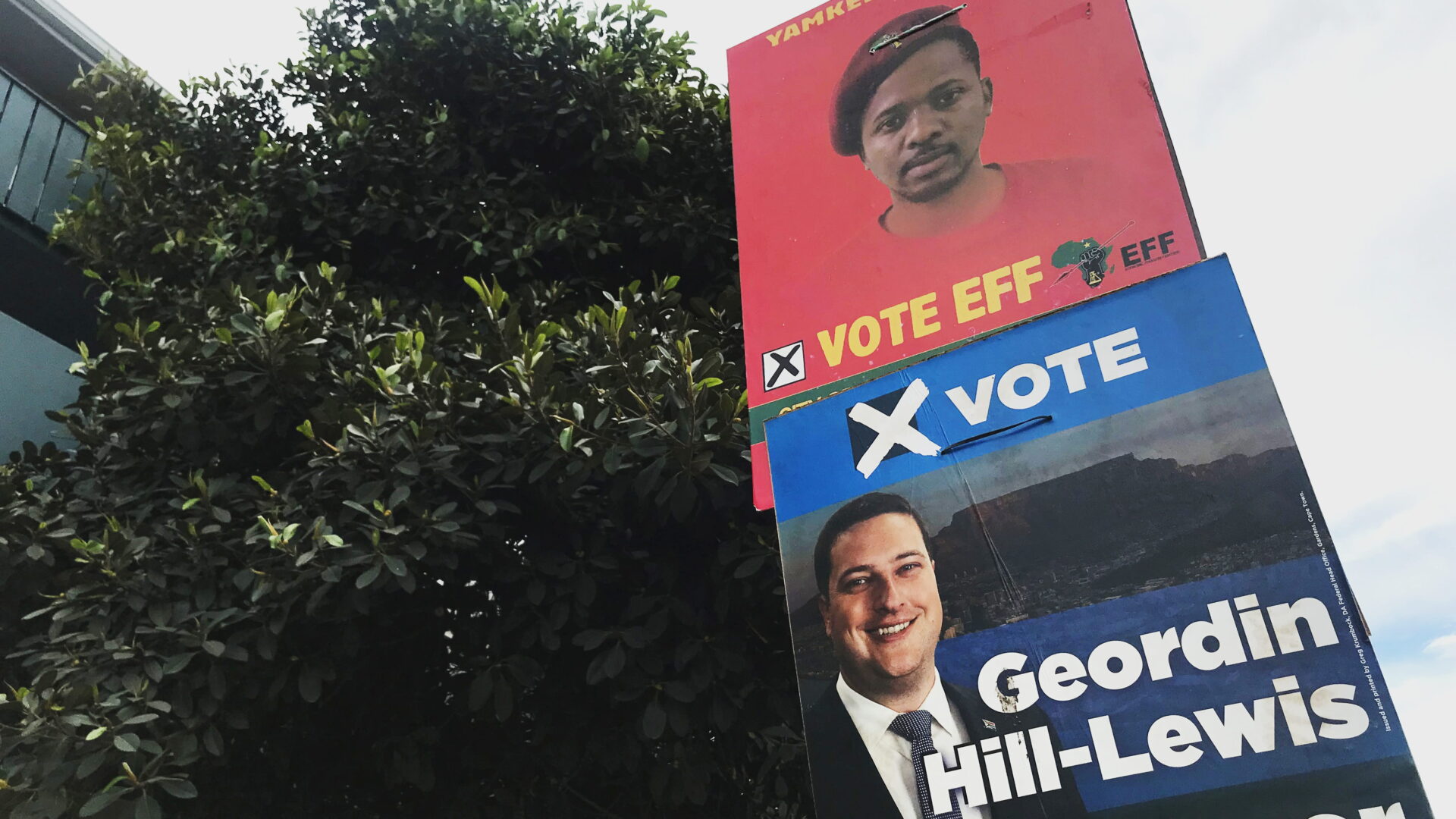
The 2024 National and Provincial Elections (NPE) marked a watershed moment in South Africa’s democratic history. For the first time, no party secured a majority in the National Assembly, whereas the African National Congress (ANC) lost its majorities in the KwaZulu-Natal (KZN), Gauteng and Northern Cape provincial legislatures. Consequently, South Africa shifted from a system in which a single party held majorities nationally and across all provinces to one in which the largest party secured only forty per cent of the national vote.
While coalitions may be topical because they are now a feature of government at national level as well as in metropolitans (metros), coalition governments are not new to South Africa. In 1999, KZN was governed through a coalition arrangement between the ANC and Inkatha Freedom Party (IFP). Furthermore, coalitions have been a feature of South African politics since the beginning of the country’s democracy, including the original Government of National Unity. Coalitions gained more prominence following the 2016 Local Government Elections (LGEs) as this was the first election in which the Gauteng metros had hung councils. The 2021 LGEs, with a record sixty-six hung councils, saw the number of councils without a majority more than double.
If the 2024 NPEs are any indication, the number of hung councils will likely increase in the upcoming 2026 LGEs. This article therefore uses the 2024 NPE results to look ahead and analyse the possible implications of the upcoming LGEs in three provinces, namely KZN, Gauteng and the Western Cape. Needless to say, the 2024 NPEs do not predict the outcome of the 2026 LGEs, but their results can be used as a broad indication of shifting voter preferences and what the outcome of the 4 November elections might be.
KwaZulu-Natal
This province saw the most dramatic change in election results compared with the 2019 elections. The uMkhonto weSizwe Party (MKP), less than a year old on election day secured 45.35 per cent of the vote, whereas the ANC dropped from 55.66 per cent to 16.99 per cent, and the Economic Freedom Fighters (EFF) also fell from 9.71 per cent to 2.26 per cent of the vote. These results suggest that the MKP grew by taking votes from both the ANC and the EFF. More importantly, they also suggest that the rise of the MKP will severely dent the ANC’s dominance in a number of municipalities. Using the 2024 NPE as a baseline, only twenty out of a total of forty-four municipalities would have a majority government. Of these twenty, fourteen would be governed by the MKP, two by the ANC and four by the IFP. The remaining twenty-four municipalities would have to be governed by a coalition consisting of at least two parties.
If the outcomes of the 2024 NPEs are any guide, the hung municipalities could be governed coalitions based on a GNU type arrangement consisting of the ANC, Democratic Alliance (DA), IFP and other smaller parties. This would represent the localisation of the GNU. Another alternative would be an ANC-MKP grand coalition. This arrangement is possible as the two parties share voters and have an ideological overlap. Under the latter scenario, most municipalities in the province would be governed by the aforementioned ANC-MKP arrangement, with a minority of municipalities under IFP control (with the DA as a partner where needed). However, this grand coalition is unlikely given the relationship between the ANC and MKP leadership.
Gauteng
Gauteng, partly because it is home to the most high-profile metropolitan municipalities, represents the most visible example of political fragmentation and coalition politics in South Africa. In the aftermath of the 2021 LGEs, only one municipality – Midvaal – was won by a single party. In the City of Johannesburg, for example, the current coalition consists of seven parties. Looking ahead to the 2026 LGEs, this trend is likely to continue. Based on the 2024 NPE results, only one municipality was won outright, and this trend towards fragmentation in Gauteng is likely to accelerate with the emergence of newer parties. Among these, the MKP in particular is expected to have a significant impact in Gauteng, given that it received ten per cent of the vote in the 2024 NPE, while recent polling puts its support at 11.5 per cent in Ekurhuleni and 12.5 per cent in the City of Johannesburg. The Patriotic Alliance (PA), while it is not a new party, also experienced growth, securing two per cent of the vote in Gauteng.
Gauteng, partly because it is home to the most high-profile metropolitan municipalities, represents the most visible example of political fragmentation and coalition politics in South Africa. In the aftermath of the 2021 LGEs, only one municipality – Midvaal – was won by a single party.
Tweet
Gauteng, unlike KZN, is governed by a different type of coalition, one that excluded the DA but included other GNU parties like the IFP, RISE Mzansi, the PA and Al Jama-ah. If the province’s GNU extends to the local level, it will essentially replicate its current provincial coalition in the metros. However, polls suggest that ActionSA (ASA) may be the kingmaker. This is noteworthy, as ASA has, in the City of Tshwane, been in coalition with both the DA-Freedom Front Plus (FF+) bloc and the ANC-EFF bloc. The other alternative, one which DA City of Johannesburg mayoral hopeful Helen Zille has not ruled out, is a grand coalition consisting of both the ANC and the DA. This would yield the ‘most stable’ coalition, as it would consist of fewer parties, but would represent a departure from the Government of Provincial Unity currently governing the Gauteng Provincial Legislature.
Western Cape
Following the 2021 LGEs, the Western Cape had a total of sixteen hung councils, double the eight hung councils recorded following the 2016 LGEs. With hung councils dating back to the 2000s, coalition governments are not new to this province. The difference is that they have so far mainly been concentrated in smaller municipalities. Importantly, the City of Cape Town, the economic engine of the province, where sixty-six per cent of the province’s residents reside, has not had a coalition since after the 2011 LGEs. The Western Cape presents a unique case, as the dominant political party, the DA, has maintained a relatively stable share of the provincial (55.3 per cent in 2024 vs 55.45 per cent in 2019). This contrasts with the ANC’s 28.65 per cent in 2019 and 19.55 per cent in 2024. This suggests that it is primarily the ANC’s vote share in the Western Cape that is fragmenting, whereas the DA’s support is largely holding steady, although it is not growing.
Based on the 2024 NPE results, the number of municipalities without a single-party majority was twelve (the same as in the 2006 and 2011 LGEs). In all instances, the DA was in the majority. This was despite the looming threat of the PA, which has at times branded itself as a ‘coloured party’, and whose share of the provincial vote has risen to 7.8 per cent. This suggests that it is the PA – and to a lesser extent the EFF – that is responsible for the ANC’s voter decline. Overall, the 2024 NPE results suggest that, after the 2026 LGEs, there is unlikely to be a dramatic increase, if any, in the number of hung councils in the province. However, it remains to be seen how parties will negotiate coalition agreements in municipalities where no party secures a majority. So far, the DA has, for the most part, worked well with the FF+ and the African Christian Democratic Party (ACDP) in coalition arrangements. Alternatively the PA has worked with the ANC to govern certain municipalities in the province.
Conclusion
The 2024 NPE results portends a future of coalitions in the aftermath of the 2026 LGEs, as newer parties gain ‘market share’ from the ANC. This is seen most starkly in KZN where the ANC’s majority has been significantly reduced by the MKP. A similar trend has occurred in Gauteng, where a section of the ANC’s vote went to the MKP and, to a lesser extent, ActionSA and the PA. Consequently, the townships of Gauteng and KwaZulu-Natal have never been so electorally competitive. The Western Cape, which, along with KZN, has had the longest history of coalitions, is unlikely to see a significant increase in the number of coalitions based on the 2024 NPE results. This is likely because of the DA’s continued dominance in the province, although this dominance is not evenly spread, resulting in hung municipalities in some parts of the province. Overall, we can expect more and more complex coalitions in Gauteng and KwaZulu-Natal, whereas the results in the Western Cape will likely replicate those of previous election cycles.
The 2024 NPE results portends a future of coalitions in the aftermath of the 2026 LGEs, as newer parties gain ‘market share’ from the ANC. This is seen most starkly in KZN where the ANC’s majority has been significantly reduced by the MKP.
Tweet
Thembelani Mazibuko is a Researcher: Coalitions at ACCORD.