
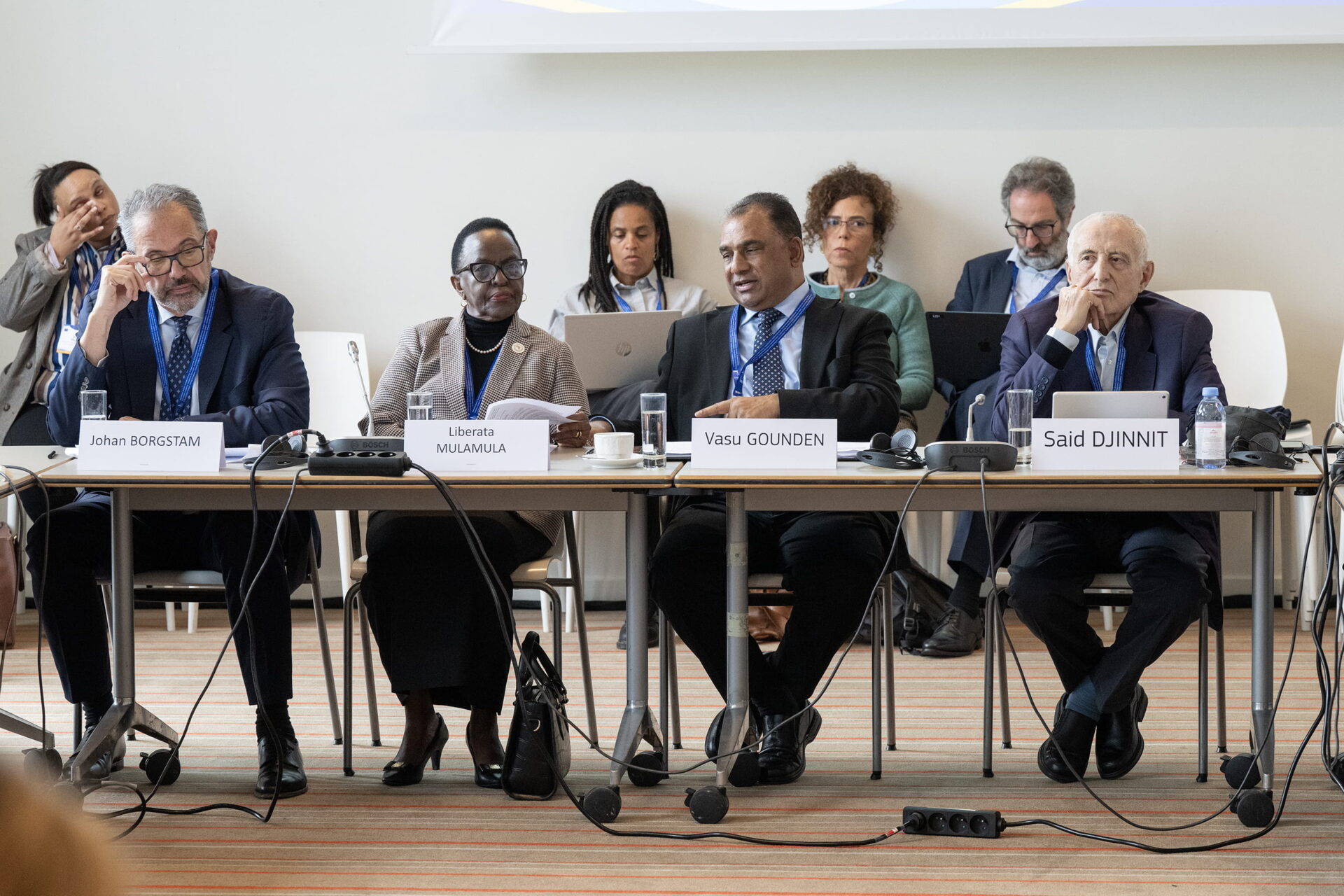
On 21 October 2026 ACCORD hosted one of the breakaway sessions at the European Union (EU) Community of Practice (CoP) on Peace Mediation, which was held in Brussels, Belgium, on 20 and 21 October 2026. The theme for this year’s CoP was Peace Mediation in the age of Power Politics.
Organised annually since 2019, the EU Community of Practice on Peace Mediation is the EU’s flagship event, bringing together government representatives, policymakers, mediation practitioners, experts and civil society representatives from around the globe. It enables knowledge exchange and constructive reflections on opportunities, challenges and best practices, feeding into EU peace mediation policies and practices. CoP stimulates peer learning, expands the global peacebuilding community and inspires creative thinking.
ACCORD’s session was on the topic of African Mediation in the age of Power Politics. Peace mediation increasingly operates in a fragmented geopolitical environment where military advantage, territorial control, external backing, resource competition and strategic interests shape conflict parties’ willingness to negotiate. Dialogue alone may therefore produce fragile agreements unless mediation also addresses the power dynamics and incentives driving conflict.
African experiences in Sudan, South Sudan, the Democratic Republic of Congo (DRC), Burundi and Mozambique highlight the interplay between political negotiations, security arrangements, regional interests and international engagement. Drawing on ACCORD’s 34 years of experience in mediation, dialogue and peacebuilding, the session examined how African mediation could adapt to contemporary power politics while safeguarding impartiality, legitimacy, inclusion and negotiated settlements. The discussion explored strategic leverage, ceasefire-to-peace-agreement pathways, engagement with non-state armed actors, and the influence of external role players, private military actors, resource competition, criminal economies and maritime interests. It also considered how African institutions and mediators could exercise greater agency while strengthening partnerships with the African Union (AU), Regional Economic Communities (RECs), the EU, the United Nations (UN) and other stakeholders.
The session was moderated by the Founder and Executive Director of ACCORD, Dr Vasu Gounden, and included three speakers: H.E Ambassador Said Djinnit, Senior Advisor: ACCORD; H.E. Ambassador Johan Borgstam, European Union Special Representative for the Great Lakes Region in Africa, and H.E. Ambassador Liberata Mulamula, African Union Special Envoy Women, Peace and Security (WPS).
The session aimed to identify practical ways for African mediation to combine principled dialogue, strategic leverage, inclusive settlements and stronger African ownership in an era of power politics. The sessions objectives were to:1) Examine how geopolitical competition and interstate conflict are reshaping mediation; 2) Identify ways to link ceasefires and security arrangements to sustainable political settlements; 3) Explore principled engagement with non-state armed actors and competing external and economic interests; 4) Strengthen mediator safety, credibility, impartiality and process legitimacy; 5) Advance meaningful participation by women, young people and conflict-affected communities; and 6) Improve African leadership and international coordination in mediation and implementation.
Over two hundred participants attended CoP, which besides main plenary sessions, included twenty-six side session discussions over the two-day event.
