
South Africa’s 2026 Reviewed Draft White Paper on Local Government identifies a number of challenges to the current local government system. Among them is a growing perception among citizens that existing local governance participation mechanisms are tokenistic, inaccessible, overly technical and fail to capture the lived experience of marginalised groups (Department of Cooperative Governance, 2026). In the context of these observations, this Policy and Practice Brief (PPB) proposes a model for mass public participation, drawing on the Afro-communitarian palaver and feminist consciousness-raising speak-outs, aimed at concretely addressing these challenges. These two independently developed but structurally similar traditions prescribe the creation of formal, maximally inclusive, meetings, in which all residents can air of grievances, and contribute to solutions.
Drawing on these traditions, this brief makes five recommendations designed to shift political expression from civil disobedience toward institutionalised dialogue, strengthen councillor mandates, and build social cohesion, while preserving the decision-making authority of municipal councils: (1) establishing an institutional framework for open-agenda, whole- or partial-community assemblies that can supplement or replace existing ward structures; (2) protected speaking time and safe disclosure conditions for participants; (3) the creation of a trained facilitator role to manage dialogue, defuse conflict, and channel anger productively; (4) a consensus-seeking procedure for shaping councillor mandates and ward priorities, paired with a formal register of dissenting views; and (5) linking these fora to the Draft White Paper’s proposed ward functionality dashboard.
The 2026 Reviewed Draft White Paper on Local Government provides a comprehensive review of South African local government structures and sets out a holistic series of potential reforms to the systems that govern them. While the scope of the Draft White Paper is far broader, this PPB seeks to build on the recommendations made in the Draft White Paper regarding citizen and community relations, and in particular the proposals made to improve ward-level participation, oversight, and accountability. The recommendations made herein draw insights from Afro-communitarian and feminist traditions of grassroots governance, decision-making, political action, and expression, specifically their respective ‘palaver’ and ‘speak-out’ practices, to provide practical mechanisms of mass public participation that can either augment or replace existing structures, depending on contextual need and practicability. The proposals in this brief align with, and expand on, those in the Draft White Paper, and are intended to inform a means of governance participation built on continuous partnership and collaboration rather than occasional consultation. This framing is important because the recommendations provided here function primarily to shift the mode of popular political expression from protest and civil disobedience towards an institutionalised grievance airing and conflict transformation mechanism. The proposed mechanisms have the secondary functions of fostering transparency, strengthening councillor mandates, improving policy responsiveness to citizen needs, and building social cohesion among citizens.
The 2026 Draft White Paper, which revisits a similar document from 1998, is intended to modernise policy frameworks around local governance. The Draft White Paper identifies the need for modernisation in the realm of public participation because there is a persistent sense among many residents of alienation from, and mistrust in, local government (Department of Cooperative Governance [DCoG], 2026). As the Draft White Paper explains, a growing sense that existing participation mechanisms are tokenistic, and that citizens cannot access information or influence government plans through ordinary means, leads to frustration among residents, which in turn can result in the normalisation of sometimes destructive civil disobedience as a form of political discourse (ibid.).
It should be noted that public participation in democratic governance is deeply rooted in South Africa’s legal frameworks. Section 152(1)(e) of the Constitution establishes community involvement as one of the constitutional objectives of local government, while section 195(1)(e) separately requires that the public be encouraged to participate in policy-making generally. These constitutional principles are realised through several different acts and practices. The 1998 Local Government: Municipal Structures Act, inter alia, establishes the legal framework for the formation of ward committees, which are committees of up to ten people drawn from local community stakeholders, formed at the discretion of local councils and tasked with advising ward councillors. Public participation is also required in the application of specific government policies and programmes. For example, Chapter 4 of the Local Government: Municipal Systems Act of 2000, which undergirds the development and execution of Integrated Development Plans (IDPs)1, legally requires municipalities to build a culture of participation through mechanisms such as public meetings, consultative sessions, and report-back mechanisms, while also mandating public engagements at every phase of an IDP’s lifecycle. Similarly, Sections 22 and 23 of the Local Government: Municipal Finance Management Act 56 of 2003 forbid councils from passing a final budget without first publishing a draft budget and responding to public objections and submissions.
The problem, therefore, is not strictly legislative, but rather systemic, relating to practical policy, application, and in some instances, the attitudes of those responsible for facilitating public participation. Participation may be restricted to formalised and infrequent events, such as IDP meetings, where time is limited and there are no clear follow-up mechanisms for communities as a whole and where important information is often difficult to access, unavailable in desired languages or appropriate mediums and registers, or circulated late. In addition, government officials often react defensively to criticism and complaint resolution mechanisms are perceived as obscure, unresponsive, and ineffective, while marginalised groups, such as youth, women, people with disabilities, those from rural areas or informal settlements, as well as working people and parents with inflexible schedules, may find increased barriers to participation (DCoG, 2026).
Beyond these practical concerns, there is a further, more conceptual limitation to many existing participation mechanisms. Ward committees, for example, are generally organised around the technical categories that structure IDP and budget processes, such as infrastructure, service delivery targets, or local industries, and therefore are less likely to draw on experiences that do not present themselves in these terms. This can resemble what feminist theorists have termed a ‘hermeneutical injustice’, where certain areas of social experience are obscured from collective understanding because no adequate structure or language exists, at least within the relevant forum, for making sense of them (Fricker, 2007). Applied to the local government context this may relate to the experiences of minority groups, migrant workers, those living in informal settlements, youth, or other particular interest groups, that do not map neatly into technical planning categories. Issues may go unspoken, not because they are unimportant to residents, but because the existing participatory structures lack the pathways to raise them as legible governance concerns. This constitutes a distinct barrier to effective participation which technical or capacity-based fixes to local or cooperative governance departments on their own are unlikely to address.
The Draft White Paper provides a number of potential solutions to these challenges but is clear that the aim of any reform is to improve public participation as a system, rather than assuming that any one model, such as ward committees, would be universally effective (DCoG, 2026). Nevertheless, the Draft White Paper does suggest that ward-based participation structures, such as ward committees, could have their roles expanded to include clearly defined monitoring and consultation requirements. However, the Draft stops short of endorsing the transfer of any decision-making powers to said structures, arguing instead that the decision-making authority of council must be preserved. Moreover, the Draft White Paper does not provide recommendations for the actual structures of participation. Rather, it recommends the establishment of a ‘ward functionality dashboard’ that tests whatever structures are developed to ensure they are sufficiently reliable, representative, and inclusive, and can be verified by local communities.
The Draft White Paper does not recommend specific mechanisms for participation, presumably to maintain the flexibility of each municipality to develop participation methods most suited to their own context. This need for flexibility and contextual sensitivity is understandable, considering the differing needs of communities in South Africa, which span broad geographic, socioeconomic, and cultural spectra. However, this need for flexibility could be satisfied if the structures in question were themselves sufficiently inclusive and adaptable to local needs, rather than by each municipality developing their own bespoke policies and practices. Maintaining a consistent broad structure across the country while allowing for local nuance would also have the benefit of being more accessible. Civic education aimed at fostering participation in one municipality would more readily provide citizens with the tools to understand and engage with governance across the country, should they move to, or have interests in, different localities.
The remainder of this brief outlines a model for public participation that is sufficiently flexible to allow for different local needs and contexts, but which can function to reinforce mass public participation. Moreover, the proposed model situates the initiative for promoting transparency and policy discussion in the hands of ordinary citizens, allowing for a more ‘bottom-up’ approach to local governance that bridges hermeneutical gaps while maintaining the formal decision-making power of councils.
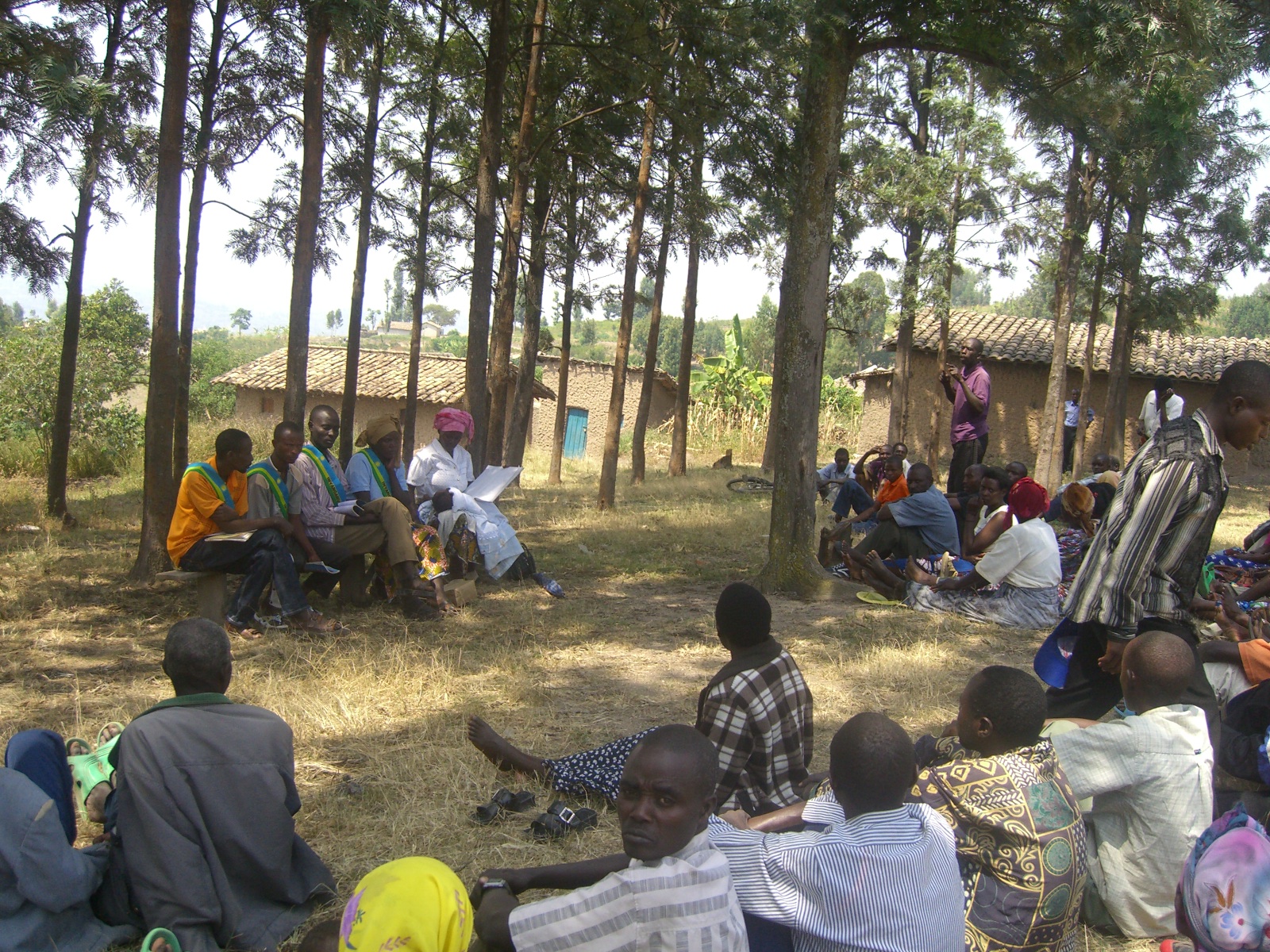
Models of participatory governance mechanisms are readily available in the pre- and post-colonial African context. Sub-Saharan Africa is incredibly diverse in languages and cultures and there is substantial diversity of political institutions and practices in the region. However, many of these disparate societies share a pre-colonial history of participatory, consensus-based decision-making (Wiredu, 1996). In these societies, political leaders could not impose decisions on the population without prior consultation and consensus agreement, with participation in decision-making open to anyone, or at least representatives of the different interest groups affected (Wiredu, 1996; Dia, 1996; Deng, 2007). However, unlike classical Athenian participatory democracy, in which every adult male citizen participated in state level governance, pre-colonial African states tended to be decentralised, with a devolution of power down to local units, such as individual settlements or even lineages (Wiredu, 1996; Deng, 2007). Each unit was essentially self-governing. As such, while local units were generally represented at higher levels of governance, higher authorities did not interfere with local decision-making, provided the issues addressed did not affect the broader community (Wiredu, 1996, Dia, 1996). This devolution of power allowed all community members to directly participate in making decisions that pertained to them.
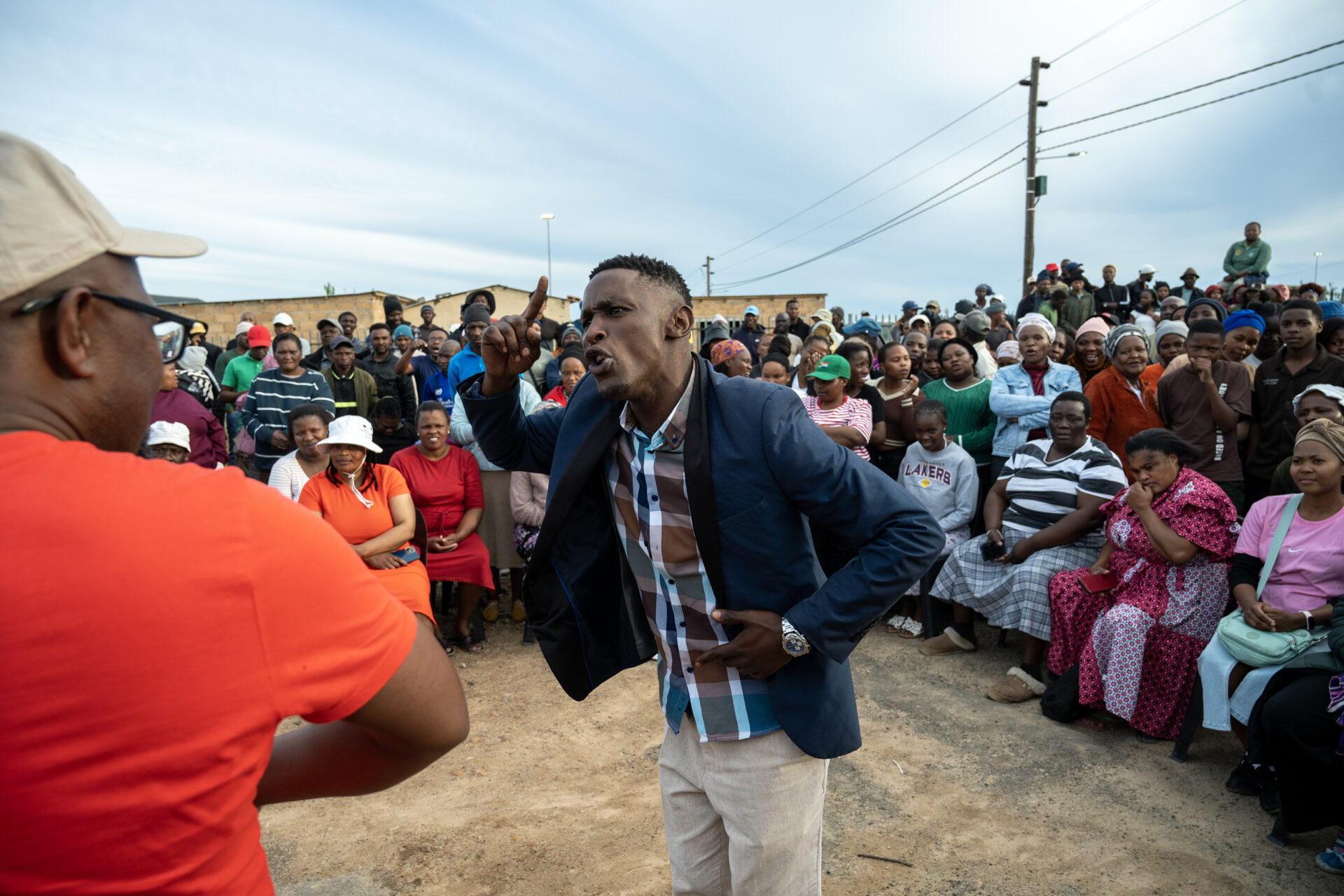
This participatory governance mechanism took the form of what Ernest Wamba dia Wamba termed the palaver.2 A palaver is an open conversation amongst all members of the community in which anyone can express their opinions openly and must respond to any accusations presented to them (Wamba dia Wamba, 1992). These public assembly meetings may be called spontaneously in response to grievances of any community member (Wamba dia Wamba and Neocosmos, 2022). According to Wamba dia Wamba and Neocosmos (2022), these discussions are not conducted by village heads, but rather by nzonzi – respected members of the community recognised as talented dialecticians. During the palaver, expressions of anger are commonplace, and every member of the community is able to critique any other member, regardless of social positioning (Wamba dia Wamba, 1985). The nzonzi, therefore, are also responsible for diffusing heated arguments, assisting members of the community who may be less proficient at expressing themselves in the face of critique or accusation, and presenting countervailing arguments or views (Wamba dia Wamba and Neocosmos, 2022). This role is essential not just for its discursive benefits, but because it allows for the expression of anger to be productively incorporated into the public sphere (Okeja, 2019).
The palaver model is useful as an articulation of the principles that may normatively undergird decision-making and justice mechanisms and mediate the relationship between different institutions. For example, as Okeja (2019) argues, under this framework, reconciliation becomes an inherent part of the political process, rather than merely one possible, albeit often desirable, outcome. This is because the restoration of at least a degree of harmony is both necessary for, and a consequence of, consensus decision making. In the modern context, and preserving the decision-making authority of the municipal council, the consensus reached at a palaver need not aim at decision-making but may also aim at deriving councillors’ mandates on specific issues or on formulating action lists, IDP timelines, and municipal budget plans. Reconciliation therefore is essential for ‘the maintenance of a positive climate for political participation’ (ibid.). By the same token, the fact that a palaver can be initiated by anyone in response to a grievance and is open to participation from all members of the community reinforces the idea that decision-making should be public, and that governance systems should be maximally inclusive and immediately responsive to the changing needs of their community.
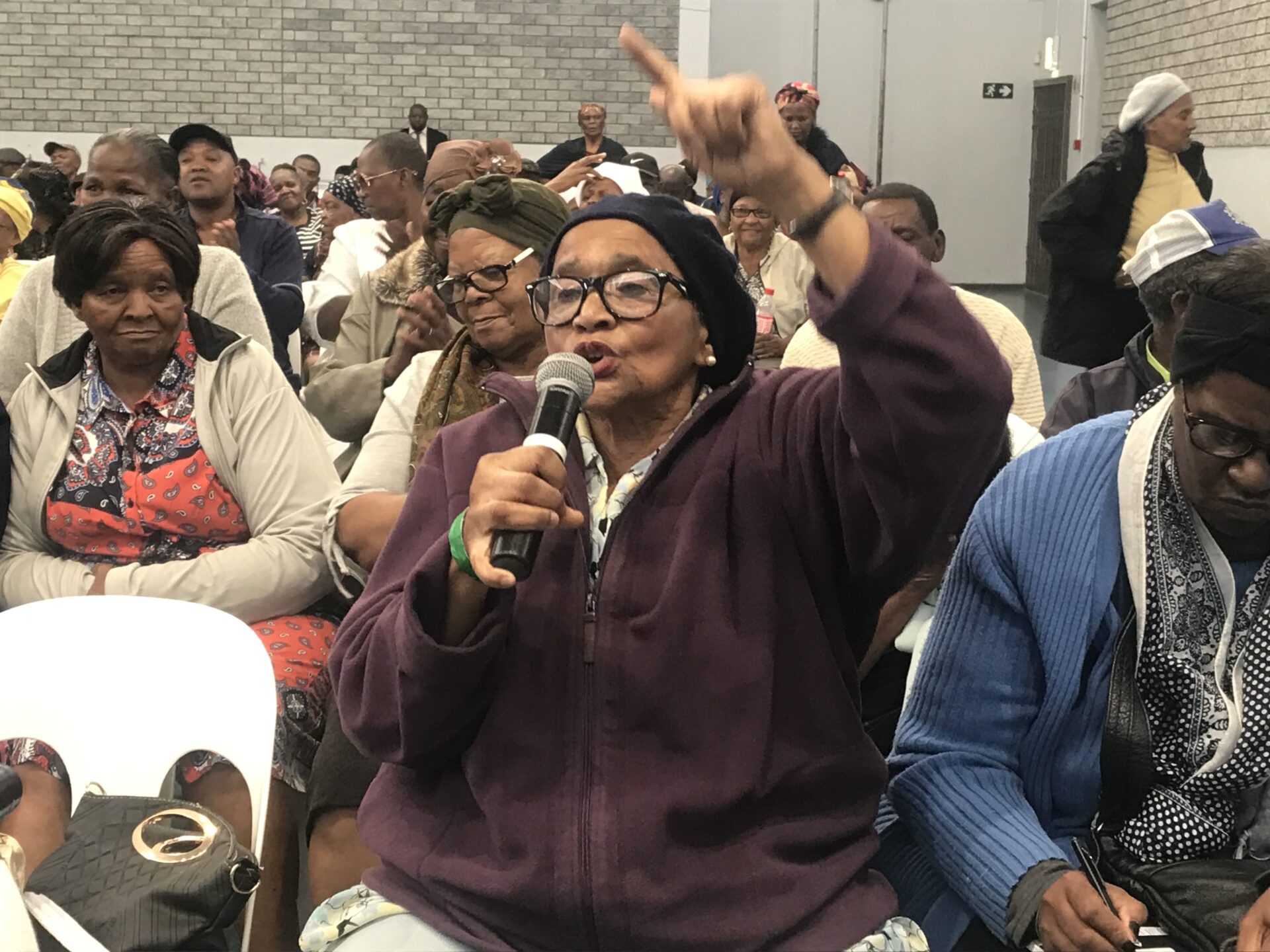
Something very similar to a palaver can be found in a modern setting in the form of feminist consciousness-raising speak-outs. While they developed independently of the Afro-communitarian tradition, speak-outs are structured, participatory meetings in which people gather to describe, in turn, their experiences of oppressive systems, and thus derive a shared understanding of those experiences. In the feminist tradition, these have addressed women’s experiences of sexism, harassment, or sexual violence, but similar events have also been utilised by other movements, including the Black Consciousness Movement. Like with palavers, participants are expected to actively listen and respond to one another, the underlying premise being that hearing many individual accounts side by side reveals patterns that no single account could show alone (Kelland, 2016). This in turn transforms what may seem like a private misfortune into a recognisably shared and political problem (ibid.).
Speak-outs differ from palavers in that restrictions may be put on who attends a speak-out, and grievance-holders do not typically address the subjects of their grievances directly. Moreover, unlike palavers, which are decision-making mechanisms, speak-outs typically aim at developing shared understanding rather than devising next steps.3 This being said both are participatory forums in which individuals attending can openly voice their concerns before a collective, and thereby reframe them as a matter of common concern. As such, an understanding of speak-outs can add insight into palaver models and how they may function to address the challenges to local government participation discussed above.
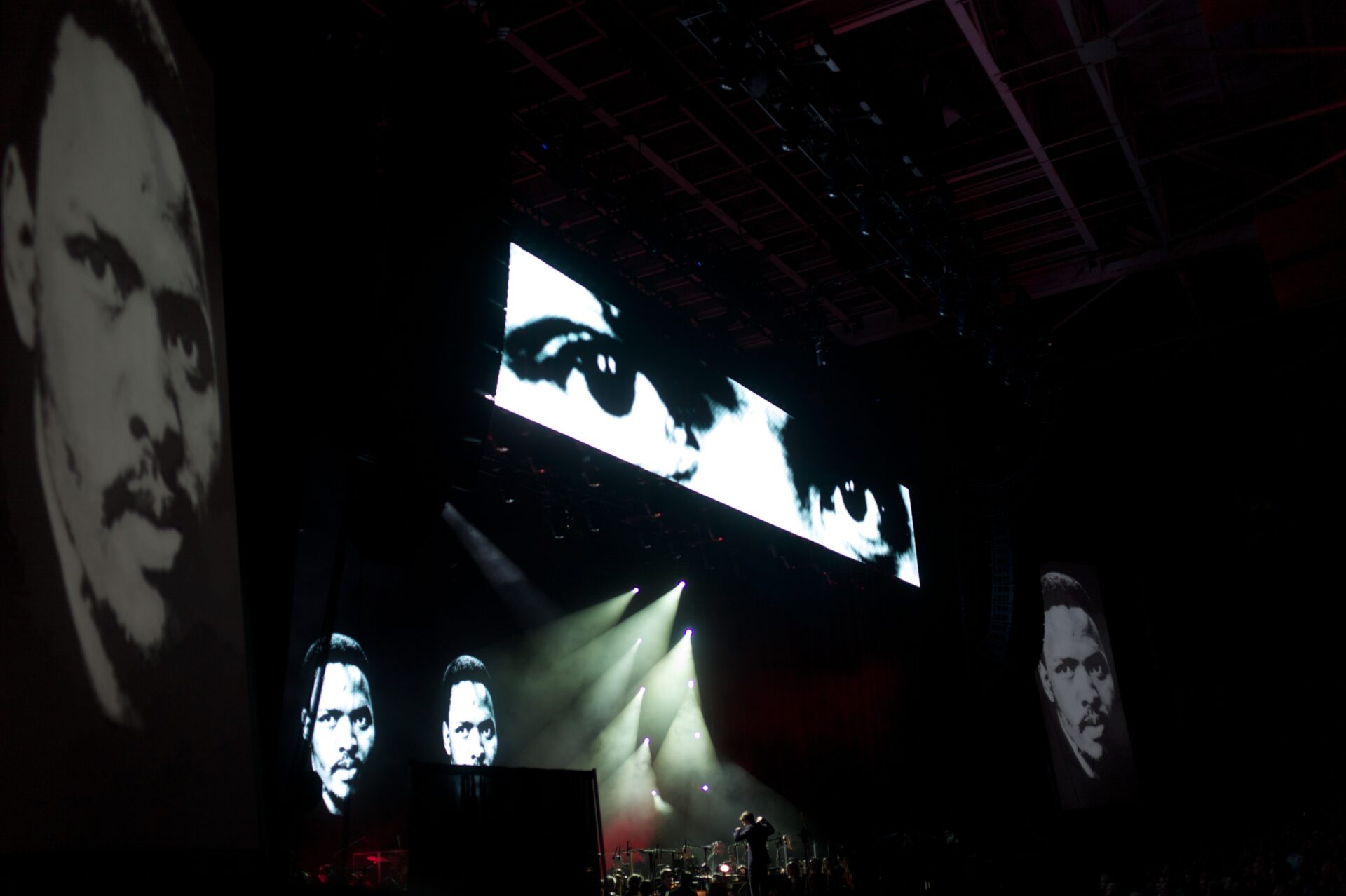
The participatory and inclusive nature of speak-outs is directly useful here, because it functions to address both the challenges of citizen frustration, which can lead to destructive protests, and hermeneutical injustice identified above. Grievance-holders are not merely permitted to speak; the format is built around the expectation that they will be taken seriously. Participants are expected to both listen and respond to the testimonies and thus collectively shape the meaning of what is said (ibid.). Not only does this provide citizens with the satisfaction of airing their grievances in a productive setting, but also allows the community to develop a shared vocabulary or conceptual framework, to understand individual and collective experiences. This is the first thing that an analysis of speak-outs adds to the palaver model: an explicit rationale and practical method for making deliberate room for testimony that may not yet be accounted for in the available institutional categories, such as IDP line items or service delivery complaints. That is, the mass participation required by palavers and speak-outs can address any potential hermeneutical injustices in a way that existing participation mechanisms may not.
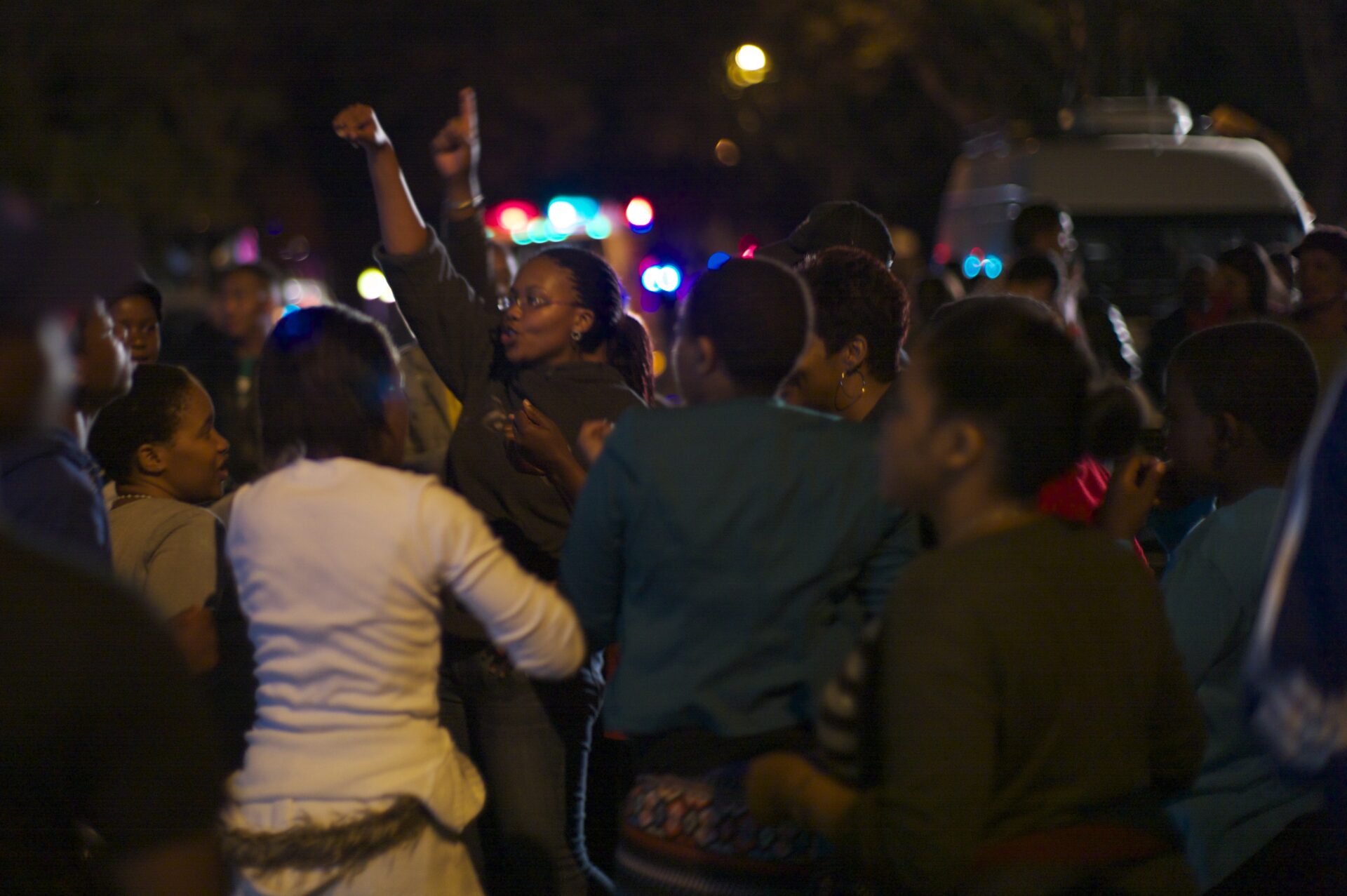
The joint palaver-speak-out model also functions to build social cohesion in two distinct ways. First, locating a personal grievance within a wider, shared pattern situates the individual as part of a collective within their community. As Bartky (1976) puts it ‘in the realisation that others are made to suffer in the same way that I am made to suffer lies the beginning of a sense of solidarity…’ This is kind of intra-community solidarity is important because it can be used to repair social divisions that may otherwise lead to conflict. Citizens may be less inclined to divide themselves along identity lines, such as race, if they feel they all share common struggles as community members.
While this is a useful sense in which solidarity may be built, the process of participation itself may also function to build shared identity and social cohesion. There is a growing body of evidence to suggest that individuals form strong positive social identities and beliefs based on their actions, particularly if those actions involve social interactions (Stein Lubrano, 2025). As such, participating in local government can inculcate a strong sense of social identity and solidarity among community members. Moreover, for governments, this means that creating community buy-in for policies and programmes is not merely a function of consultation, but rather a function of community members actively engaging in said programmes. Maximising community participation may therefore also create more trust in the benefits of a programme or policy within the community.
This sense of solidarity is also extrinsically important because it demonstrates that such fora can preserve the heterogeneity of differently situated experiences. As Kelland (2016) argues, it is possible to build solidarity ‘within and across differently situated… groups… while maintaining, indeed emphasising, the heterogeneity of… lived experiences’. This has a direct, practical implication for the palaver-speak-out model as a community-gathering structure. Depending on local context and needs, a single, whole-community assembly may not be sufficient on its own. Smaller, differently constituted gatherings organised around diverse interests, such as gender or youth, could sit alongside a whole-community palaver, feeding into it without being subsumed into a single, falsely homogenised account of the community’s view. Additionally, while the aim of a palaver is consensus, this is a consensus on the actions to be taken as a result of the palaver, not on the beliefs of the participants. As such, it may be necessary to formally record a register of dissenting views and ideas.
This combination of the validation of the grievance itself and solidarity among those who share it gives the palaver-speak-out model its political charge, distinct from simply airing complaints through ordinary bureaucratic channels. It should be noted that citizens being heard within the room is not sufficient alone to constitute meaningful participation. Kelland (2016) distinguishes the validation and hermeneutical justice that can be achieved inside a speak-out from the more demanding question of whether the concepts and grievances raised are taken up by those on the outside, including by ‘institutions of justice’. Without that external uptake, she cautions, what is achieved internally does not straightforwardly translate into justice for participants. In the context of local government, this distinction demonstrates the limits of the palaver-speak-out model. A forum that can succeed in making residents feel heard, but carries no obligation on the municipality to formally respond to what has been raised, risks reproducing exactly the gap Kelland identifies. As such, a palaver-speak-out forum must coincide with a mechanism such as the ward functionality dashboard suggested in the Draft White Paper. This functions as the institutional counterpart required to convert the sense of being heard, generated within the gathering, into an actual change in how grievances are addressed.
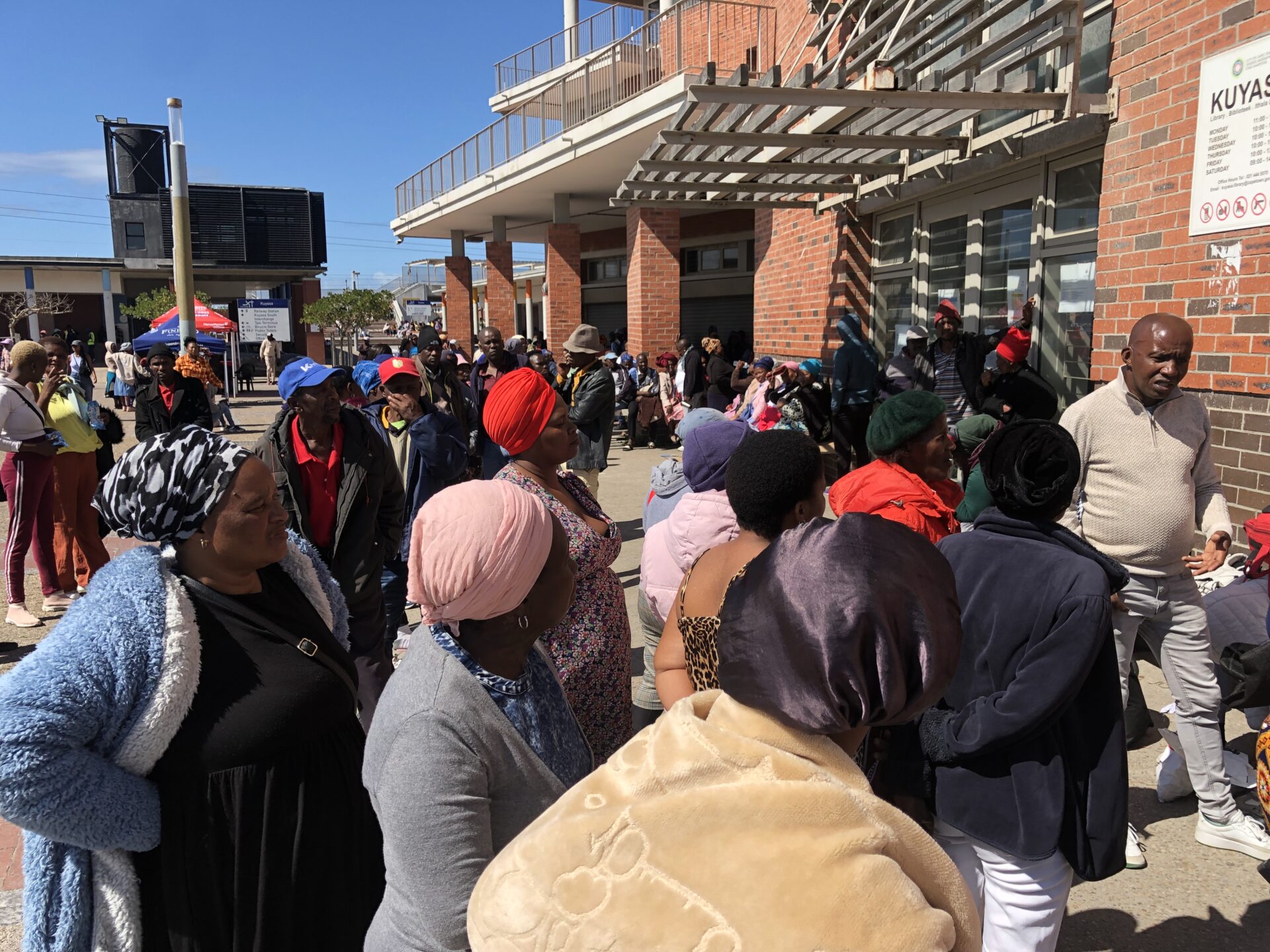
The above details the broad principles of a structure for public participation in local government based on the palaver and speak-out practices found in African and feminist traditions. In order to understand this as a practicable model however, particular focus needs to be paid to the specific mechanisms of the structure. To this end, the following recommendations are made:
These gatherings may replace existing participation mechanisms, but they may also be designed to supplement or run parallel to existing mechanism (for example, replacing specific ward committee meetings, such as budget presentations, but not all). Including the whole community in this process is essential, however, as it both fulfils the democratic principles of participation, and combats hermeneutical injustices. Similarly, allowing any member of the community to submit agenda items, and mandating that these be given due consideration, provides a structured outlet for grievances and may bring potential conflicts to the fore before they escalate.
Merely allowing individuals to submit agenda items may be insufficient to ensure that ideas are taken seriously and that they feel their concerns have been adequately accounted for, particularly for marginalised groups. Moreover, airing grievances, particularly those related to wrongdoing within political or administrative processes or those held by minority interest groups, may carry substantial personal risk for participants. As such, allowances for safe disclosure conditions is essential for ensuring the effective surfacing of concerns.
Facilitators can support meaningful participation by helping community members formulate submissions, overcoming barriers such as language, literacy, disability, and confidence in public speaking. They should also be responsible for communicating complex technical issues in accessible ways, creating a constructive space for the expression of public grievances, and facilitating dialogue outside party-political structures. This independence is important for building community trust and thus fostering participation, particularly in politically contested contexts. The facilitator may be an elected role provided it is protected from party capture, however they may also be appointed from respected community members or employed as a civil servant.
Aiming the process at consensus-building helps to maximise community solidarity, buy-in and faith in governance processes. However, this can stop short of requiring political conversion for the participants who take different standpoints on specific issues. The process should instead focus on achieving consensus on councillor (not council) mandates or ward priorities within budget and IDP processes, acknowledging that the overall mandate of the council, and its decision-making authority, is derived from regular election processes.
This final recommendation aligns closely with the Draft White Paper but is worth reiterating. Institutional commitments supported by regulation, or even legislation, is essential for ensuring that the palaver-speak-out model goes beyond mere talk and becomes an effective method of public participation that can be bought into by citizens.
The above recommendations are designed to align with both the existing legislation on local government participation and the policy direction set out in the Draft White Paper. Under this model, the statutory mandate to enhance participatory democracy can be sufficiently strengthened by supplementing existing structures with mechanisms drawn from Afro-communitarian palaver and feminist consciousness-raising traditions. Read together, these traditions set out a coherent model that can be re-contextualised to address meaningful participation in local governance. Specifically, one can develop a model based on safe, inclusive community assemblies with open agendas overseen by a trained facilitator where decisions are made by consensus and dissent is formally recognised. Such a model must be anchored to mandated response timeframes and to the accountability processes envisaged by the Draft White Paper’s proposed ward functionality dashboard. In so doing, this model closes the gap between residents’ expressions of anger and raising of ward issues, and municipalities obligations to act. This model may also function to deepen social cohesion among residents, as the act of participation itself can build durable social identity and buy-in, more so than mere consultation. In this manner, the model both fulfils the democratic value of participation, shifts the primary means of political expression, even of anger, to a constructive forum, and builds social cohesion among residents.
Adam Randera is a consultant to ACCORD on coalition governance, and an independent peacebuilder and researcher who specialises in transitional justice, youth- and gender- inclusivity.
1IDPs are five-year, legally-binding, strategic blueprints that determine the spending of municipalities.
2In many traditional African societies, the location in which the palaver occurs lends its name to the practice of public engagement. Wamba dia Wamba uses the term Mbongi or ‘fire place’. In Southern Africa this is often called the inkundla or lekgotla (derived from kgotla), which is a public courtyard.
3It should be noted that During the Black Consciousness Movement in South Africa, speak-outs occurred alongside, and fed into, the development of alternative institutions to those of the state, such as medical clinics for underserved black communities.
Constitution of the Republic of South Africa, 1996, ss 152(1)(e), 195(1)(e).
Local Government: Municipal Finance Management Act 56 of 2003 (S. Afr.).
Local Government: Municipal Structures Act 117 of 1998 (S. Afr.).
Local Government: Municipal Systems Act 32 of 2000 (S. Afr.).
Bartky, S. (1976) Toward a phenomenology of feminist consciousness. Social Theory and Practice, 3(4), pp. 425–439.
Deng, F. M. (2007) Human rights in the African context. In K. Wiredu (Ed.), A companion to African philosophy, Blackwell. pp. 499–508.
Department of Cooperative Governance. (2026) Reviewed draft White Paper on Local Government. Government Gazette No. 54630, Notice No. 5. Available from: https://static.pmg.org.za/54630_7-5_CoopGov-5-128.pdf [Accessed 9 June 2026].
Dia, M. (1996) Africa’s management in the 1990s and beyond: Reconciling indigenous and transplanted institutions. World Bank.
Fricker, M. (2007) Epistemic injustice: Power and the ethics of knowing. Oxford University Press.
Kelland, L. (2016) A call to arms: The centrality of feminist consciousness-raising speak-outs to the recovery of rape survivors. Hypatia, 31(4), pp. 731–745.
Okeja, U. (2019) Palaver and consensus as metaphors for the public sphere. In L. K. Jenco, M. Idris, and M. C. Thomas (Eds.), The Oxford handbook of comparative political theory, Oxford University Press. pp. 565–579.
Stein-Lubrano, S. (2025) Don’t talk about politics: How to change 21st-century minds. Bloomsbury.
Wamba dia Wamba, E. (1985) Experiences of democracy in Africa: Reflections on practices of communalist palaver as a method of resolving contradictions among the people. Philosophy and Social Action, 11(3), pp. 5–23.
Wamba dia Wamba, E. (1992) Beyond elite politics of democracy in Africa. Quest: An International African Journal of Philosophy, 6(1), pp. 28–42.
Wamba-dia-Wamba Bazunini, E., and Neocosmos, M. (2022) The thought and practice of an emancipatory politics for Africa. Tricontinental: Institute for Social Research.
Wiredu, K. (1996). Cultural universals and particulars: An African perspective. Indiana University Press.

